
News &
Events
Rubisco Develops a Sustainable Composite Sandwich Panel with Gurit materials
Combining Gurit PET, AMPRO BIO and BioTEX to Create Lightweight, Sustainable Composite Panels
Composites have always been valued for their strength-to-weight ratio, durability and design versatility. However, when incorporating recycled or renewable materials, achieving like-for-like mechanical performance is not always possible, and a trade-off in structural capability can occur. Despite this, there are many non-structural applications for composite panels where benefits such as lightweight construction, thermal insulation, rapid installation and design flexibility are the priority.
With this in mind, Rubisco approached Gurit to help develop a composite sandwich panel using natural fibers, aiming to combine the practical advantages of composites with improved environmental performance for non-structural use cases.
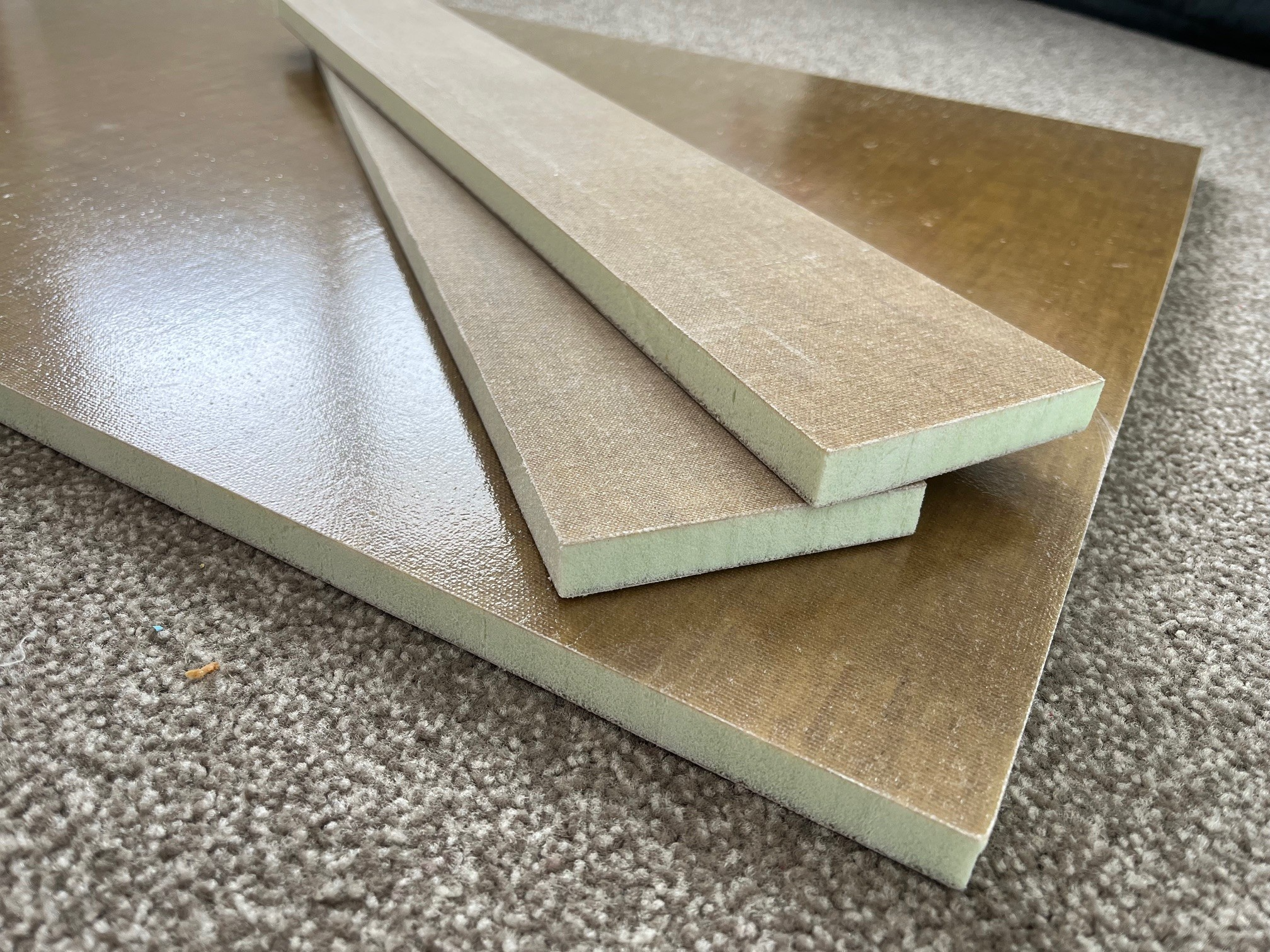
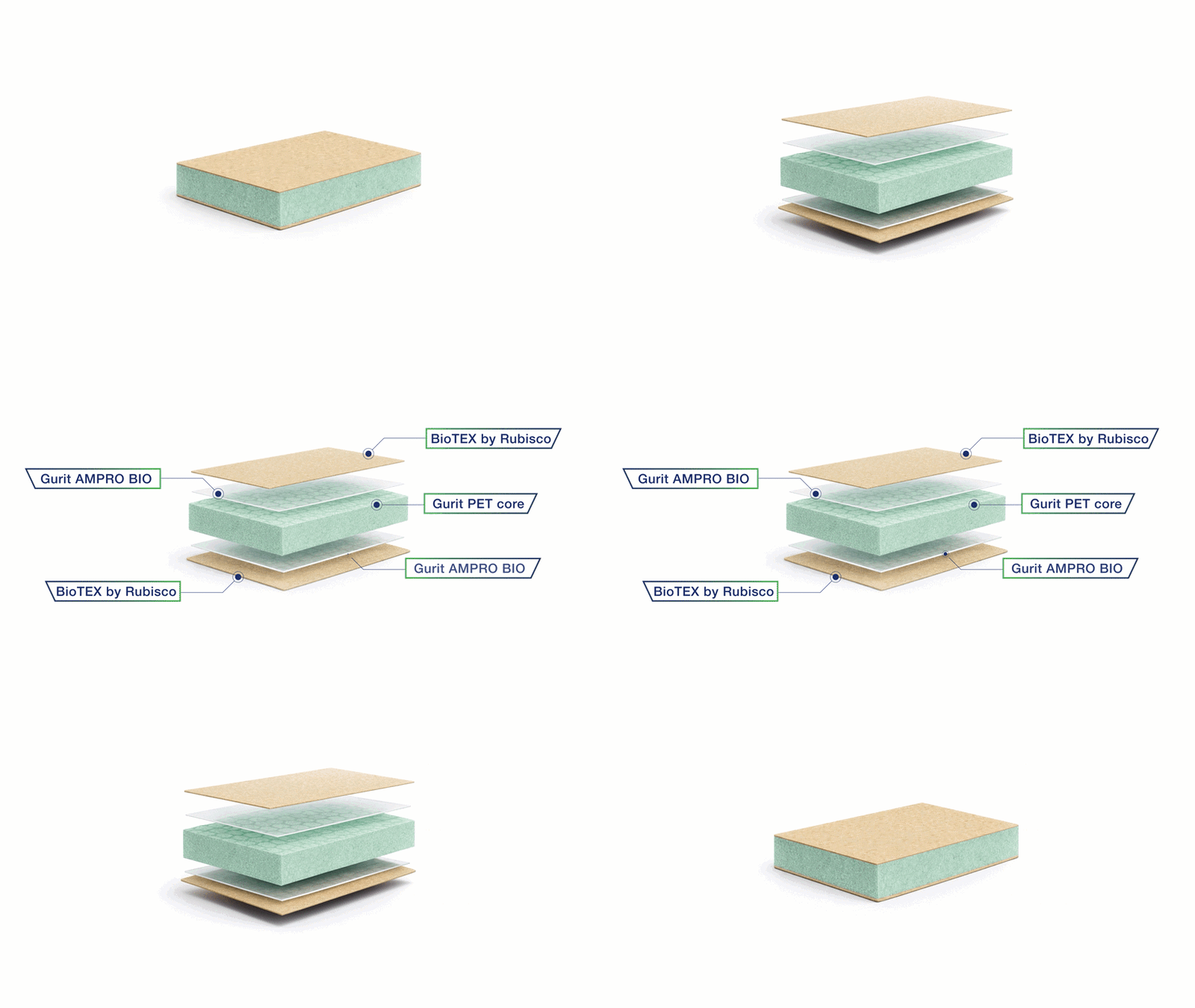
The result is a panel that brings together recycled and bio-based materials with natural fiber reinforcement. Three material technologies sit at its heart: Gurit’s PET recycled structural foam core, Gurit’s AMPRO BIO epoxy resin and Rubisco’s BioTEX hemp fabric. Used together, they form a lightweight structural panel that is made with up-to 100% recycled or bio-based material content depending on the configuration. The resulting panel can also be tailored to individual needs and material requirements, with changes to thickness, reinforcement architecture and dimensions all being fully adjustable.
Rubisco: Reimagining Tomorrow Through Natural Materials
Rubisco is a New Zealand-based materials company with a clear focus to build naturally through the use of natural fibers like hemp and wool, turning them into high-performance materials. Rubisco works across construction, textiles, interiors and advanced composites, driven by a mission to innovate with like-minded partners, such as Gurit, to enable a switch to a more sustainable way of life.
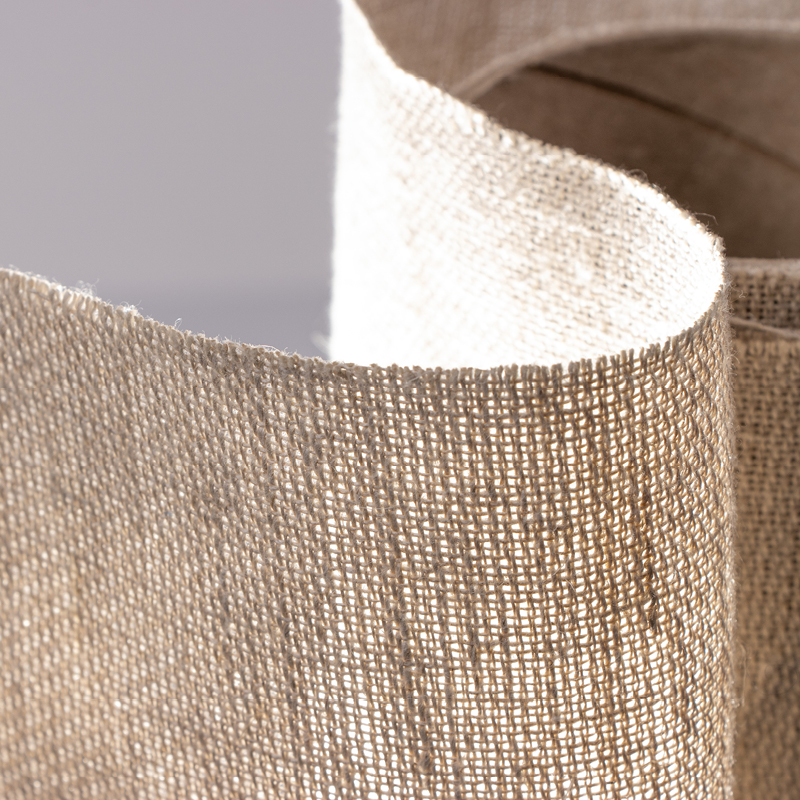
One of Rubisco’s key offerings is their BioTEX fabric – the material chosen for this project with Gurit. BioTEX is a natural fiber reinforcement fabric made specifically for composite manufacturing.
Hemp brings some obvious advantages to this kind of work, being inherently lightweight and renewable. And, due to its distinctive woven texture, when used in a sandwich panel it not only offers strong structural performance, but also a distinctive visual style that allows it to work as a design feature in certain applications.
The Sustainable Sandwich Panel Concept
The Gurit x Rubisco panel is built around the simple principle of a composite sandwich structure. In basic terms, thin outer skins are bonded to a lightweight core, which is “sandwiched” between them. This construction provides stiffness and rigidity while keeping overall weight to a minimum. This is a well-established construction method in lightweight engineering. For this particular panel, the outer skins are made from BioTEX hemp fabric which is laminated with AMPRO BIO epoxy resin, while the core is Gurit’s recycled PET structural foam. The combination brings together recycled polymer, plant-derived resin chemistry and renewable natural fibre in a single end panel.
Composite sandwich panels are highly versatile, with performance that can be tailored by adjusting core thickness, laminate thickness, fabric architecture, and overall dimensions to meet different performance targets. The same fundamental material concept can produce a thin decorative interior panel or a thicker panel capable of carrying loads. This gives engineers and designers the freedom to tailor the panel to their needs and explore new possibilities across different applications.
Gurit PET Structural Core
In 2025, Gurit recycled the equivalent of 946 million post-consumer PET drinking bottles and recycled 9,874 metric tons of PET waste generated through our own operations.
The result of this, and at the center of the Gurit x Rubisco panel, is Gurit PET – a structural foam core made from up to 100% post-consumer recycled content.
It is a lightweight, versatile, strong and cost-effective core material with excellent properties and lower resin uptake. But most importantly, when compared to traditional materials such as MDF, Gurit PET offers a significantly lower carbon footprint. For example, manufacturing 1,000 sheets of PET instead of MDF delivers savings equivalent to driving 12,535 miles, charging nearly 400,000 smartphones or the amount of carbon sequestered by around five acres of forest in a year. In fact, for the same environmental impact, approximately twice as many PET core units can be produced compared to MDF.
With strong compressive properties and low density, it is ideal for use in many different applications. Not only does it increase stiffness and strength, but it also keeps the overall panel weight extremely low. Gurit PET also contributes to thermal and acoustic insulation, making it particularly beneficial for applications such as interior panels and certain external uses like façade systems where insulation performance is important.
Gurit AMPRO BIO Epoxy Resin
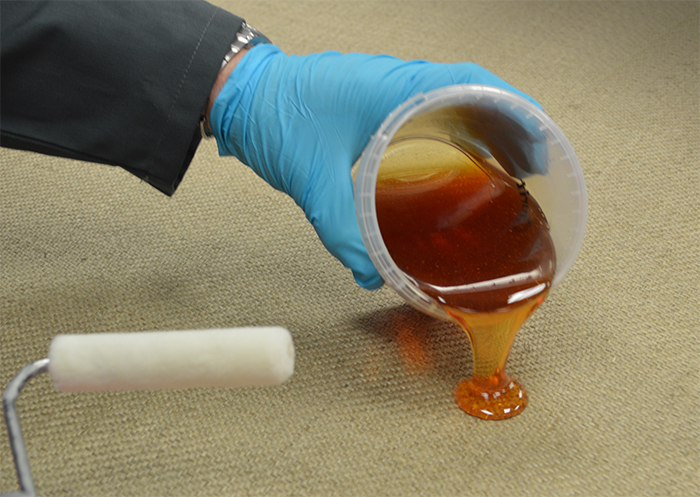
The resin system used in the Gurit x Rubisco panel is called AMPRO BIO, one of Gurit’s bio-based epoxy resin systems. The mixed Ampro Bio system has up to 43% bio-carbon content from plant-derived feedstocks, reducing the end product’s carbon footprint while still delivering good fiber wet-out, strong adhesion and consistent structural properties.
Rubisco BioTEX Hemp Fabric
The outer skins of the panel use BioTEX from Rubisco – their natural reinforcement fabric made from hemp that has been designed as a sustainable solution for use in composite structures.
Beyond its renewable origin, hemp is increasingly recognized as one of the lowest-carbon reinforcement fibers available. Industry studies across Europe and North America indicate that hemp cultivation can sequester approximately 3,300–4,400 lbs of CO₂ for every 2,200 lbs of fiber produced, while processed hemp fiber can achieve cradle-to-gate emissions ranging from approximately –0.7 to +0.2 lbs CO₂e per lb of fiber, depending on processing intensity and system boundaries. By comparison, conventional E-glass fiber production typically sits in the range of ~0.7–1.1 lbs CO₂e per lb fiber due to the high energy demands of glass manufacturing. As a result, natural fiber composite systems are commonly associated with embodied carbon reductions in the region of 20–50% compared with traditional glass fibre composites, depending on resin selection, fiber content and manufacturing method.
The hemp fibers in the BioTEX also offer good tensile strength at low density. When combined with Gurit’s AMPRO BIO epoxy resin system, they produce durable skins with a unique visual finish, while also introducing improved end-of-life pathway optionality compared to conventional glass fiber composites. Depending on the overall system design, natural fiber composites can support improved energy recovery characteristics, reduced material persistence and compatibility with emerging recycling or fiber recovery approaches.
Potential Applications
Due to the panel’s configurability, it means it is suitable for a wide range of applications across varying sectors.
For example, in marine interiors, it could be used for bulkheads, cabinetry, wall linings and ceiling panels. Due to being lightweight, it can support the overall efficiency of a vessel, reducing its in-service carbon footprint.
In motorhomes, campervans and recreational vehicles, lightweight sandwich panels are already widely used for cabinetry, interior partitions, seating structures and storage. Replacing traditional materials such as plywood with laminated PET panels can deliver the same or greater screw retention performance, while achieving around a 50% weight saving. PET also offers two to three times the thermal insulation of plywood (depending on density), along with significant weight reductions of up to 60-70% compared to materials like MDF. Using materials with improved sustainability and performance credentials in these applications therefore presents a clear opportunity for manufacturers looking to reduce vehicle weight, improve efficiency and enhance overall sustainability.
The panel is also well suited to architectural and interior design including decorative wall panels, acoustic elements, partitions and feature surfaces where the natural fiber texture can become part of the visual identity of a space.
In commercial furniture, the combination of strength, low weight and distinctive aesthetics gives designers a unique material. It could be used in desk surfaces, modular systems, or in storage and workspace partitions, offering a solution that is both functional and visually interesting.
Beyond these, the panel system could be applied in exhibition structures, retail environments, transport interiors and many other settings where customized composite panels are needed.
The Future of Sustainable Composite Panels
The Gurit x Rubisco collaboration works as a demonstration of where composite panel manufacturing is heading.
By combining multiple sustainable materials, it shows that modern composites can deliver the performance needed while reducing overall environmental impact.
It also shows that with carefully considered material selection, the resulting composite materials don’t have to stay behind the scenes. While materials like carbon fiber have long been used as a way to give surfaces a distinctive visual character, the hemp fibre in BioTEX opens up new opportunities for more natural, design-led aesthetics where the material itself can be fully appreciated.
Gurit Products and Materials
With over 40 years of experience in advance composites, Gurit is commited to creating a stronger, lighter and more sustinable future.
Rubisco Products and Materials
The natural shift begins here. Learn more about Rubisco as they reimagine tomorrow through natural materials.